

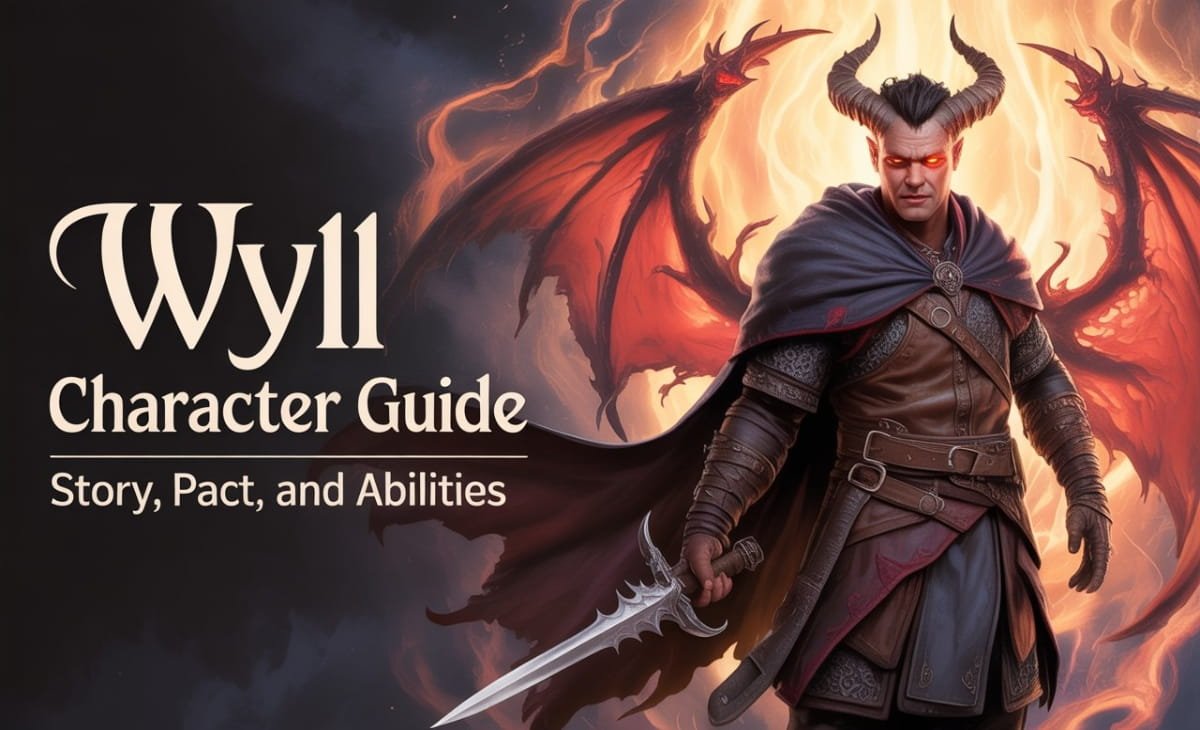

If you searched for Wyll, chances are you’re not just looking for a name. You’re trying to understand why this character from Baldur’s Gate 3 feels so different, so human, and in many ways more complicated than the classic fantasy hero archetype. Players don’t search for Wyll only to learn his abilities; they search because they’re conflicted about his choices, curious about his pact, or unsure how to role-play him without losing what makes him special.
Wyll matters right now because modern RPG players want more than power builds. They want moral tension, identity struggles, and consequences that feel real. As someone who has completed multiple playthroughs with Wyll both as a companion and as a player-controlled origin character, I’ve seen firsthand why he sparks debate. He is not the strongest companion on paper, but he is one of the most emotionally grounded characters Larian Studios has written.
This guide goes deeper than surface-level summaries. It explores Wyll’s background, his pact with Mizora, his mechanical strengths and weaknesses, and the philosophical tension that defines him. More importantly, it explains how to play Wyll in a way that feels authentic, not optimized to the point of losing his soul.
Who Is Wyll? A Clear and Grounded Background
Wyll, known across the Sword Coast as the Blade of Frontiers, is a human warlock bound to the cambion Mizora. Before the events of Baldur’s Gate 3, he made a pact to gain power in order to save others, believing the cost would be worth it. That decision defines everything about him.
Unlike many warlocks in Dungeons & Dragons lore, Wyll does not crave power for dominance or knowledge. He wants to be a hero. He wants to be seen as someone who protects the helpless, even if the truth behind that heroism is darker than the songs suggest.
What makes Wyll compelling is that he knows his legend is partly a lie. He performs heroism publicly while privately questioning whether his pact makes him unworthy of praise. That internal conflict is not just narrative flavor; it directly shapes dialogue options, companion reactions, and long-term story outcomes.
From a storytelling perspective, Wyll represents a modern take on heroism. He is not pure, but he is trying. That distinction is why players remember him.
Understanding Wyll’s Pact With Mizora
At the heart of Wyll’s story is Mizora, his infernal patron. Their relationship is not a simple master-servant dynamic. Mizora is manipulative, theatrical, and deeply invested in reminding Wyll that his power is borrowed, not earned.
Through my own playthroughs, I noticed something subtle but important. Mizora does not just punish Wyll when he disobeys. She tests him. She places him in situations where every choice costs him something, whether that cost is power, reputation, or personal integrity.
This makes Wyll’s pact one of the most narratively rich warlock stories in modern RPGs. The player is repeatedly asked to decide what “being a hero” really means when the tools you use are morally compromised.
A useful visual here would be a decision-flow diagram showing how different pact-related choices affect Wyll’s appearance, abilities, and story outcomes across Acts 1 through 3.
Why Wyll’s Story Feels So Personal
Many players connect with Wyll because his struggle mirrors real-world ethical dilemmas. He represents people who do good work through flawed systems, or who achieve success at a personal cost they rarely talk about.
In conversations with other players and through community discussions, a common theme emerges. People don’t dislike Wyll because he’s boring. They struggle with him because he forces them to confront uncomfortable questions. Is it still heroism if the power comes from something corrupt? Is public good enough if private truth is painful?
That emotional realism is rare in RPG companions, and it explains why Wyll’s approval system feels more nuanced than others. He responds strongly to acts of mercy, fairness, and honesty, but reacts poorly to cruelty disguised as pragmatism.
Gameplay Perspective: What Wyll Brings to the Party
From a mechanical standpoint, Wyll is a Fiend Warlock by default, which gives him access to strong early-game damage and survivability tools. Eldritch Blast with Agonizing Blast scales well throughout the game, making him consistently useful even without heavy optimization.
However, players often misunderstand Wyll’s role. He is not meant to outshine pure damage dealers like Lae’zel or optimized spellcasters like Gale. His strength lies in flexibility. He can deal damage, control the battlefield, and handle social encounters thanks to high Charisma.
In my experience, Wyll shines most when used as a mid-range controller rather than a glass cannon. Leaning into spells like Hex, Hunger of Hadar, and counter play abilities allows him to influence fights without dominating them. This aligns well with his narrative identity as a protector rather than a conqueror.
A comparison chart showing Wyll’s combat role versus other companions would help readers visualize why he fits certain party compositions better than others.
Building Wyll Without Breaking His Character
One of the biggest mistakes players make is forcing Wyll into hyper-optimized multiclass builds that strip away his narrative coherence. While multiclassing into Paladin or Bard can be mechanically strong, it often clashes with his story unless role-played carefully.
If you want to build Wyll in a way that respects his character, focus on reinforcing his identity as a reluctant but determined hero. Maintaining his warlock levels preserves the ongoing tension with Mizora, which is central to his arc.
That said, selective choices can enhance both gameplay and story. Invocations that improve battlefield control, defensive options that keep him alive longer, and spell selections that emphasize protection all feel thematically consistent.
The key insight here is that Wyll does not need to be min-maxed to be effective. He needs to be played with intention.
Real-World Design Insight: Why Larian Wrote Wyll This Way
From a game design perspective, Wyll reflects a shift in RPG writing toward morally gray protagonists who are still aspirational. Larian Studios has spoken in interviews about wanting companions who feel like real people, not just stat blocks with backstories.
Wyll’s narrative structure mirrors what narrative designers call “value dissonance.” His actions and his ideals are not perfectly aligned, and the story does not rush to resolve that tension. Instead, it lets the player live with it.
This approach increases player investment. When you help Wyll, you are not fixing him. You are walking beside him while he figures himself out.
For readers interested in narrative design, linking to Larian’s official developer interviews or academic discussions on moral choice systems, such as Harvard’s work on ethics in interactive storytelling, adds authoritative depth.
Step-by-Step Guide: Playing Wyll Authentically
Playing Wyll well is less about mechanics and more about decision-making. Start by choosing dialogue options that reflect sincerity rather than bravado. Wyll performs confidence, but he values honesty.
As combat encounters progress, position him where he can support allies rather than chase kills. Use spells that control space and protect weaker party members. This reinforces his identity as a front line hero who relies on infernal power reluctantly.
When faced with pact-related choices, resist the urge to always choose the option with the best reward. Wyll’s story is at its strongest when the player accepts consequences in exchange for integrity.
Over time, this approach creates a play through that feels cohesive and emotionally satisfying.
Visual and Media Suggestions
A character timeline graphic showing Wyll’s major decision points across the three acts would help players understand long-term consequences. A spell synergy diagram could also visually explain how his abilities support different party roles without overwhelming newcomers.
Screenshots comparing Wyll’s appearance before and after key pact decisions would add emotional context to the narrative impact of player choices.
Frequently Asked Questions About Wyll
Is Wyll a good companion in Baldur’s Gate 3?
Yes, Wyll is a strong companion both mechanically and narratively. While not the highest damage dealer, he offers flexibility, crowd control, and one of the most emotionally engaging story arcs in the game.
Can you break Wyll’s pact with Mizora?
Wyll’s pact can be challenged and reshaped through story decisions, but it is never removed without consequences. The game intentionally avoids easy resolutions to reinforce the weight of his choices.
What class is Wyll best suited for?
Wyll works best as a warlock with a focus on control and survivability. While multiclassing is possible, staying close to his original class preserves story consistency.
Is Wyll better as a companion or origin character?
Playing Wyll as an origin character provides deeper insight into his internal conflict and unlocks unique dialogue. As a companion, his story is still impactful but slightly less personal.
Why do some players find Wyll less exciting?
Wyll’s arc is subtle rather than explosive. Players who prefer immediate drama may overlook his depth, but those who engage with his moral struggle often rank him highly.
Conclusion: Why Wyll Is Worth Your Time
Wyll is not just another companion. He is a reflection of modern heroism, where doing the right thing is complicated and often costly. His story rewards patience, empathy, and thoughtful play, offering a depth that goes beyond combat effectiveness.
If you’re willing to engage with his struggles instead of rushing past them, Wyll becomes one of the most memorable characters in Baldur’s Gate 3.
If you want to explore deeper character-driven RPG experiences, consider reading our related guide on morally complex companions in Baldur’s Gate 3, or share your own Wyll playthrough decisions in the comments. Your choices might help other players see him in a new light.