

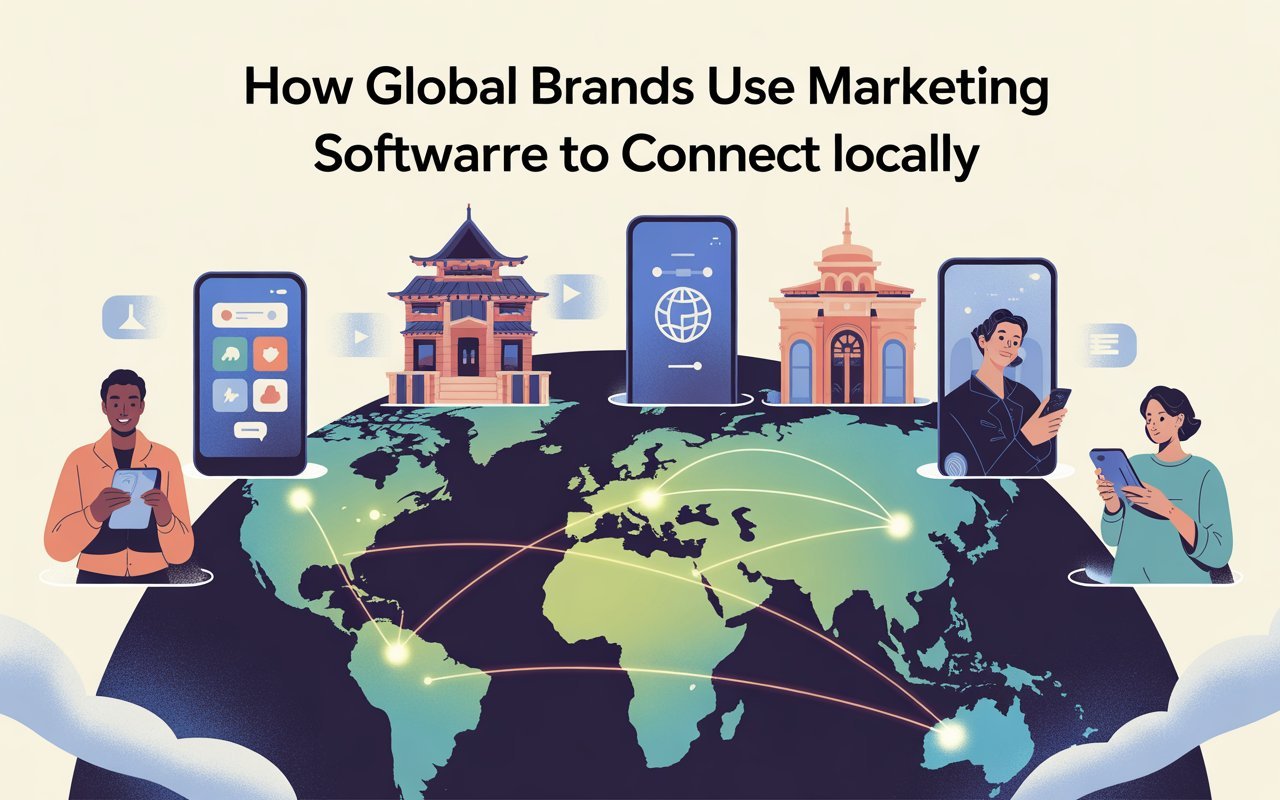

Marketing evolves according to the preferences of the masses. Brands grow bigger; their tools become more advanced. Tools become more complex, and data moves faster than ever, but the real advantage is achieved when data is used locally. The successful companies of the world are investing in tech tools in a strategic manner. They use automation with cultural awareness and keep strategy centralized while giving local teams room to adapt messaging. Execution makes the difference between simply operating worldwide and truly connecting within each market.
Centralized Strategy, Decentralized Voice
The successful global brands operate with a clear central marketing framework. Brand tone, design systems, messaging strategy, and compliance rules are made at headquarters. Marketing software platforms, often enterprise-level systems like Salesforce and Adobe, help maintain that consistency across regions. But here’s where things get interesting.
The global brands rarely push identical campaigns worldwide. Instead, they create modular campaigns. Headquarters provides assets, templates, and messaging guidelines. Regional teams adapt them.
Marketing software makes this possible by separating core systems from visible messaging. A global email campaign, for example, might share the same automation flow everywhere. But subject lines, imagery, cultural references, and calls to action shift based on local insights. This model protects brand identity while allowing local nuance. And it only works when the software supports collaboration across time zones, languages, and teams.
Data is global. Meaning Is Local
One of the most repeated themes across leading business analyses is the role of data. Marketing platforms collect behavior patterns from millions of users across regions, tracking open rates, purchase timing, device usage, and abandonment points to guide smarter decisions. A global dashboard might show that mobile engagement is high in Southeast Asia. That doesn’t automatically explain why users click, or what tone resonates, or how trust is built. That layer requires interpretation.
Smart brands use marketing software to surface insights, but they rely on local teams to translate meaning. Sometimes that translation is literal, through processes like software language translation integrated directly into campaign management systems. Other times it’s strategic, adjusting messaging based on local buying psychology. The software provides patterns. Humans provide context.
That balance shows up repeatedly in case studies from companies using platforms like HubSpot and SAP. Automation handles segmentation. Regional marketers refine tone and positioning. It sounds obvious. But many companies skip that second step. That’s when campaigns begin to feel generic and disconnected.
Marketing Automation Without Cultural Blindness
Automation can launch campaigns across dozens of countries almost instantly. While efficient, it also increases the risk of mistakes. Many global brands rely too heavily on automated workflows without adapting timing, tone, or channel preference by region.
For example, a promotional email sent at 9 a.m. local time might perform well in one country but feel intrusive in another. A product announcement that works in a direct-sales culture may fall flat in markets that rely more heavily on peer reviews or community trust.
Marketing software now allows geotargeted scheduling, region-based workflow branching, and content personalization layers. The technology is there. The real question is whether organizations use those capabilities thoughtfully.
The brands that succeed treat automation as a framework, not a substitute for cultural understanding. They build flexible logic into workflows. They allow regional override rights. They test locally before scaling globally. In practice, that often means campaign libraries are shared, not imposed. Templates are adaptable. Content blocks are swappable. And the result? Campaigns feel locally created, even though the systems behind them are centralized.
Local Content at Scale: The Role of Workflow Integration
Content localization is where many strategies either thrive or collapse. One consistent observation from top-performing brands is that localization is embedded into the marketing workflow itself. It isn’t an external process that happens after campaigns are built.
When content is created, localization pathways are already mapped. Translation management systems connect directly to marketing automation tools. Approval cycles include regional stakeholders. Content repositories are structured for reuse across languages.
Without that integration, delays stack up. Messaging fragments. Teams duplicate effort. In some cases, companies integrate mobile application translation into the same ecosystem so that product messaging inside apps aligns with external campaigns. This avoids the awkward mismatch where a user clicks a localized ad but lands in a partially translated interface. These integrations may seem operational, but they shape how customers experience the brand.
Technology Stack Alignment Across Regions
Another pattern emerges from examining global marketing operations: tool fragmentation is common. Headquarters might use one platform. Regional offices might rely on others. Data sits in silos. When that happens, connecting locally becomes harder, not easier.
The brands that scale effectively standardize core platforms globally. This doesn’t mean removing regional flexibility. It means ensuring that data, reporting structures, and performance metrics align.
Enterprise ecosystems often revolve around integrated solutions from providers like Oracle. But even smaller brands build aligned stacks using interoperable tools. If regional campaigns can’t be measured consistently, optimization becomes guesswork. And if local insights don’t flow back to global strategy teams, learning stalls.
Governance, Compliance, and Risk Management
It’s easy to focus on creativity and overlook compliance. Yet for large industries such as finance, healthcare, and enterprise technology, regulatory alignment is non-negotiable. Marketing software now includes compliance approval layers, audit trails, and region-specific content restrictions. Global brands configure these safeguards carefully.
Each region may require different processes, like localized disclaimers. data storage, compliance, and consent management. Embedding these requirements into marketing workflows prevents last-minute crises. It also protects brand credibility. Smaller industries sometimes underestimate this layer. Larger ones can’t afford to. And as regulations evolve, adaptable marketing software becomes even more valuable.
Conclusion
Marketing software delivers speed, structure, and scale. It organizes global teams and tracks performance in real time. Connection happens when brands respect local context. When campaigns feel created for people, not just translated for markets. When tone, timing, and message align with cultural realities. The companies that succeed globally understand this balance. They use technology as infrastructure but rely on human judgment to shape meaning. Expanding globally may attract attention, but long-term loyalty depends on local relevance. The strongest brands achieve this not by forcing uniformity, but by respecting regional differences.